12.17.2013

Chris Mirjahangir's Transcendence

Searching the term "transcendence" via Wikipedia, one finds that it is a religious concept of being detached from the material world of matter and energy, being of a greater plane of existence. That philosophy is what a militant group of survivors bestow onto an unsuspecting family in Chris Mirahangir's short film of the same name.

Chris obviously has use of many tools that many aspiring filmmakers do not have. Such is ADR. Put that together with HD cameras and professional grade editing suites, a CGI producing program, and others, a cinematic artist has themselves a high grade production facility. Chris knows how to use these tools. He is part of a generation that is bringing what some consider the highest art form into reachable reality to people who do not have such access.

We start off the film in black and white as a boy stabs at the dirt, obviously frustrated, taking in nature along with a problem he is having – his step father. The use of black and white isn't to inspire a John Cassavetes-esque grittiness. Black and white cinematography relieves the cinematographer of a lot of problems that come with lighting. Thus, it is a practical tool here. There was only one instance of an over-exposed shot in the film. Whether or not it was intentional, is unknown.

Visual motifs are at work here. This was shot in a southern western location. Plants and low lying rocks are about. How does Chris use them? The presence of the rocks is more stated the farther along the narrative we go (the more dire the situation, for the sparse couple of characters we are introduced to, the more we see a visual allusion to a dystopia).  These are also used as an example of framing. The rocks and the wild grasses are of rough textures, particularly the grass when the breeze is about. Have a human character sit in it, and you draw attention with the juxtaposing. A difference between the grass and the rocks come about when height is taken into account. In sitting, people are above the grass. When the rocks become a visual motif, they usually dominate the human characters. There are other examples of framing; such is the reflection off of a mirror-like demon eye, or the space between an open car door and the car itself.

Now, let’s talk how the human character's interactions tell the story. We have a set up not unlike CHILDREN OF THE CORN, but add two characters. Maybe THE LOST BOYS is a better comparison. A step father, getting his family back from vacation, has problems with his adopted son. Maybe this is a personal story. The step father says his piece to the rebellious son and continues the ride back home. But another interruption crosses their path - a wrecked camping site. Blood splattered remnants are about. Curiosity kills the cat, quite literally (though it takes some time) by the aforementioned militant survivors, who are hiding from a demon (visually referenced via the bird we see the step son look at in the beginning).
A question that pulsed through my mind was whether or not there was going to be an APOCALYPSE NOW kind of character arc, where the demons everyone fears are outweighed by the demons within the hearts of the characters. The stepfather wants his new son killed off. He also doesn't seem too happy with the rest of his new-found family, though he says to his step son that he has accepted them.

The ending can lead to a lot of debatable meaning. A question to be asked is if the demons are real demons from a real hell, or if they are a life form that resembles a demon. Depending on which it is, the murder/suicide of all but one character (unknown) in the film could mean a couple of things. If these are the demons you hear of in the religions of the world, then maybe the murder/suicide isn't as crazy as it would seem. One has to wonder about the afterlife fate of these characters. Could the father go to hell? If the latter, only a creature that resembles a demon, then a kind of primal thinking (not necessarily evil) can be used to evil’s agenda – hence the father’s actions. Both religious and non religious readings of the ending though show the ruthlessness of the father. The father doesn't seem to care if he is killed in the end. He knows that the pain in his ass that is his new step son is going to be killed. He decides to kill his new wife and daughter instead. The leader of the militant group sees it a different way, that this act of transcendence is quite real and sees the father as the genuine, good dad. Such  dramatic irony.

The foil for the step husband and his family are Chris' own character and his implied girlfriend. It’s all done out of love. Killing the demons, enacting transcendence, all of it is for love; fear of that which is worse than death.

If there was only one complaint I would have, it would be a lack of enough emphasis on things like POV shots. When the step father is on the ground and told to follow a path, a POV shot from the father's perspective of the pathway would be nice. It’s not as bad as it could be though, since the emphasis is kept on the face of the actor. Chris sees the drama that comes from facial expression to be more fulfilling to the drama than an expressive POV shot. It’s a respectable decision.

I would hope for an extended version or sequel to TRANSCENDENCE. There is a lot of potential here.  I liked it. Wait, guess what? There is an extended cut!

In Regards to the Extended Cut

I have been privileged to have viewed the extended cut of TRANSCENDENCE. Its 5 minutes longer, colored, and much more dramatically satisfying edit of the film. Fuller orchestra, more details. Spoilers and the kinds of details that surround the film's universe's history will not be talked of here, but know that it is a more dramatically satisfying piece. Things I liked about the initial black and white cut of the film are not sacrificed. The Sergio Leone-esque ending is kept. Characters are meditated on longer. Keep an eye out for this filmmaker.   

11.10.2013

PACIFIC RIM is the best kaiju film since G.M.K.


When writings about the kaiju genre, the line between "what is" and "what isn't" is controversially quantified. Many say its subjective. Dracula would be called a kaiju in Japan. But, what is a kaiju eiga has to be a film in line with what popularized the genre and based on what it spawned, the collective aesthetic. Thus, criteria will be the presence of kaiju that are 100 feet tall plus the acknowledgement of Japanese kaiju eiga, whether it be mentions which matter to the story of the film to the aesthetics used in music, shot composition, ect. If a foreign adaptation of a Japanese kaiju is to count as kaiju eiga, then the character has to be represented respectably.

Chapter 1: "conscious of the heritage" - GDT

2004-2005 was death to kaiju eiga in Japan. The late 90's was the beginning of the tipping point. On one hand, Shusuke Kaneko predated Christopher Nolan by resurrecting Daiei's Gamera franchise with films whose quality juxtapose greatly with what came before. At the same time, the American Godzilla film premiered - an event in which fans were disappointed, Godzilla was made into a generic giant monster ripped of the qualities unique to the Godzilla character. All charm was drained out. Meanwhile, Toho tried to resurrect Godzilla from 1999-2004. Tomoyuki Tanaka had passed away, leaving Shogo Tomiyama to become the producer of Toho's Godzilla films.

Shogo Tomiyama is a producer who seems sketchy. In the documentary BRINGING GODZILLA DOWN TO SIZE, Tomiyama claims that he tries to emphasize a "sense of wonder" with Godzilla films. Elsewhere, Tomiyama exhibits that this sense of wonder is something Tomiyama associates only in the image and not the screenplay. Oriental Cinema mentions in their review for GODZILLA 2000 "According to a Japanese talk show, Tomiyama agrees that the human subplots shouldn't propel the main story of any Godzilla films." Tomiyama's misunderstanding continued on when commenting on 2001's GODZILLA, MOTHRA, KING GHIDORAH: GIANT MONSTERS ALL OUT ATTACK's success being more so than 2002's GODZILLA AGAINST MECHAGODZILLA. As shown in an interview on Henshin!Online [in context of box office numbers], "Not as well as GODZILLA-MOTHRA-KING GHIDORAH: GIANT MONSTERS ALL-OUT ATTACK but better than GODZILLA X MEGAGUIRUS. I think, as in the case of GMK, last year's box office success was partly owed to the animated co-feature HAMTARO (Tottoko Hamutaro). But as a producer, I seriously tried to find any specific reason why GMK had been more profitable than GODZILLA X MECHAGODZILLA." GMK was almost the last Godzilla film of the Millennium series. GMK brought Shusuke Kaneko in to direct a Godzilla film many say is the best since the 80's, if not, since the Showa series. Shogo Tomiyama is a producer who lacks an artistic viewpoint that could balance out the business side of his thinking.

For the rest of the Godzilla series, Shogo Tomiyama brought back a director who had failed with GODZILLA X MEGAGUIRUS, Masaaki Tezuka, who luckily made two good Godzilla films, only to bring in Ryuhei Kitamura in a career-killing move to make GODZILLA: FINAL WARS where there was more emphasis on other film-source styled human fighting in lieu of kaiju fighting. While Kitamura's film was an aesthetic failure on an anniversary year, Tezuka's attempts were outshined by Hollywood productions. With GODZILLA, MOTHRA, MECHAGODZILLA: TOKYO SOS, box office attendance was skim considering that at the same time, Japan had American imports THE LAST SAMURAI and FINDING NEMO for the choosing.

The principle at play here is a paradox. Godzilla films have become entertainment without much of a social message and keeping on to the heritage kept to using suit (though CG has started being used as a main proponent, starting with GAMERA 3 from 1999). Problem is that the miniature effects alienate CG-savvy audiences who lack suspension of disbelief. Tomiyama saying in a HenshinOnline interview that Godzilla films are meant to be "entertainment, not political movies", something which has always been a backbone to give kaiju films substance to counterbalance the aesthetic-specific special effects, shows a lack of knowledge regarding the mechanics of the genre. The Masaaki Tezuka films from 2002 and 2003 tried to tell a tale of life after death in a very science based world, but it didn't work.

After GODZILLA:FINAL WARS, the kaiju genre quickly took a turn for the satirical. ULTRAMAN: THE NEXT, a henshin property with kaiju that has been able to survive due to television was the only real winner here, complete with a darker take on the generally light hearted franchise. Big productions otherwise failed. GUILALA'S COUNTER ATTACK, which contained potty humor with a sprinkle of meta-humor didn't click with audiences. GAMERA: LITTLE BRAVES was a good family film, with some great direction, but the changing of Gamera's roar was only the top of the list as far as why it didn‘t click with audiences. The American produced DEATH KAPPA went out of its way to be “traditional” when it was not matting images together while mixing in whacky humor, including a cameo by a transvestite. Meanwhile, the only success kaiju eiga had in Japan were smaller independent projects like G, GEHARHA, DEEP SEA MONSTER REIGO, RAIGA which gained notoriety for being quality productions, but the metaphysical comedy was still reigned in. There was a change in the audience. The dichotomy for what passed the test for realism grew more complex thanks to films like THE DARK KNIGHT or IRON MAN. Realism was traded in for realistic. Kaiju eiga is a mix of science fiction and fantasy, a mix which doesn't get a lot of audiences. If there was going to be any resurgence in the genre, it was going to be something unexpected.

The possible rebirth of the kaiju film came out of left field, from America. Fans doubted it possible, considering 1998. First was 2008's CLOVERFIELD, a film which utilized a shaky-cam aesthetic for realism with a film that knew its heritage with the back story being regarding the Tagurato oil rig, an Ifukube-esque end theme, and a manga pseudo-sequel. Kaiju eiga has been through aesthetics resembling blockbusters, Italian neo-realism, German expressionism, and now late 90's fake-documentary variation of cinema verite. A lot of the logical scientific questions a cynical viewer might ask would be forgone due to emphasis on characters and the effects of the monster's presence and lack of emphasis of the monster itself. This kind of film is what Shinji Higuchi, special effects director of the 90’s Gamera trilogy was talking about in his hour and a half interviews on the Gamera trilogy DVDs.

What helped turn audiences away from kaiju eiga will help bring it back. The comic book movie climate has started opening doors for the mass marketing of other properties that was once seen as niche and geeky. These doors would let pass films which would technically be superior to the franchise installments that preceded it. 5 years after Cloverfield, PACIFIC RIM and a reboot of GODZILLA are here. This is where, when speaking about terms of heritage, PACIFIC RIM fits into the scheme of things (bringing in the aesthetic of world creation).

CHAPTER 2.1: THE REVIEW

The beginning of PACIFIC RIM is not unlike what you might see in Cloverfield. We get a kaiju film which shows us the kaiju head on, and brings us into the world of the film not going metaphysical with its substance. We are shown the emotion a character who has lived through this since he was 15 is feeling. In this monologue, we also get wrapped up in a logical turn of events. The first kaiju attack was memorialized (like 9/11), the success of the Jaeger program spawned a merchandising franchise in the gun-ho spirit of success (like World War II with characters like Captain America and films like Kelley's Heroes), and now the latest downturn in the kaiju wars where the kaiju are evolving faster than the Jaegers are being improved, and our main character - in one of the most emotional scenes in the film where Raleigh Brackett, all grown up and getting to fight the kaiju that have haunted his world since he was 15, looses his brother in a fight with the kaiju Knifehead. PACIFIC RIM concerns the end of the war, with the audience being treated to emotion backed up by details that give the proceedings an air of realism. This done via some shaky cam footage via news station footage, rogue guerilla direction (focus on a main subject is kept, but there is an uneasiness in the movement of the camera). The knife head fight is filmed in the same way as the rest of the movie, regular.

Then we are treated to a beginning credits sequence not unlike that of a Masaaki Tezuka Godzilla film or 1989's Gunhed. Pacific Rim fits.

If the beginning credits didn‘t suffice, there are other instances in which Guillermo Del Toro and Travis Beachman‘s script show their skills as fictional universe creators. The question of kaiju corpses has been answered with architecture centered around kaiju bones echoing the modernist buildings structured around trees. It also has an answer in a kaiju black market, which parallel's China's very real black market for endangered animal parts which have scientifically questionable effects on one's physiology. The question of kaiju motivation is also answered via the same as GODZILLA VS. MONSTER ZERO; aliens wanting to conquer (question of timing is answered due to global warming a la GODZILLA VS. HEDORAH, unlike 2001 YONGGARY). The Jaeger program's rise and fall play's into the question of kaiju evolution and biology, detailed like ever before. Present is a two brain explanation showing that, like Godzilla or Rodan, the main source of inspiration for the kaiju’s internal biology are the dinosaurs. The brief mention of kaiju cults is like an indirect reference to readings of kaiju by people like Norio Akasaka who saw Godzilla as "a representation of the spirit of soldiers who died in the South Pacific", though Pacific Rim seemingly dismisses it. The fantasy is not in the divine but how something that would be atomically unstable in this world could exist.

The Jaeger program has it all too. Reminiscent of Gundam G or Evangelion in its engineering, the process by which is a good source of drama for the characters that, while relatable, is fiction enough to make it fantastic. Of course, the Jaegers are there more for a visual since giant robots is a future reality for the viewers. There is Top Gun esque machismo which pilots of older Jaegers are ridiculed and the like.

Chapter 2.2: The Evolution of what giant mech mean for Japan

The Jaegers though bring about a subtext to PACIFIC RIM. The use of the mecha, and the appearance of a Mecha toy, is indicative of a cultural context. In the very quick prologue of the film, we already see the national pride that the Jaegers are cloaked in with images of a child waving to a Jaeger followed by a parade of soldiers in a Jaeger exhibition. At the final scene of the Knifehead battle, in Anchorage, Del Toro makes a visual allusion: a tin toy robot. Tin toy robots, some of the oldest Japanese pop culture toys, a predecessor to the culture that creatively spawned the Jaegers, are icons. Japan took over the industry, taking what was originally a Nazi-era German product (nice, considering the Jaegers have a German name) and made it Japan’s own to the point that they became the toy making capitol of the world, a title they still own. The mecha-pride doesn't stop there.

The fact that there is a good Japanese connection to the film means that the following shouldn't be taken with a grain of salt. Consider that Mako, the most important female character of the film, was very young when she lost her parents to a kaiju attack and was almost killed specifically by a Ganimes-like kaiju. She was very young at the time (and the majority of the film takes place in 2025), it is easy to see that Japan was one of the first countries attacked by Kaiju. In a country whose atomic tragedies have made it a post-apocalyptic country, a kaiju attack is almost a repeat of such. Where as Mako's character makes an interesting comparison for Ayana in GAMERA 3, Japan's history (as shown in the film) is not unlike an almost restaging of Godzilla. Very much a metaphor which could be applied to the Heisei Mechagodzilla, the Jaegers are not just the only thing which can handle the kaiju physically, but it is almost beckoning of WW2 and post-WW2 sentiments. As mentioned by Crispin Freeman in ANIME: DRAWING A REVOLUTION, robots in Japanese culture have taken on an almost divine status, the physical embodiment of science getting humans closer to the celestial, almost embodying a kami sentient being for Japan. Mecha like Tetsujin 28 (Gigantor) evolved out of this notion. WWII Japanese citizens imagined a giant robot laying waste to their antagonist, America. This is the role that a Jaeger might take for a character like Mako. The physical aesthetics of the Jaeger, particularly Gypsy Danger, could be seen as a point against this, but Mako riding Gypsy Danger talks more to the sense of teamwork that the countries that share the Pacific Rim took up. But, as Mako starts piloting a Jaeger (and the untold story of Japan’s Jaeger - Coyote Tango) it is almost as if Japan has turned a one time resent against who were ultimately the good guys and turned it toward a global threat - the world saving the world being a theme Del Toro has stressed.

Chapter 2.3: Kaiju

The physicality of the kaiju is what makes the film the most legitimate as kaiju film. As Del Toro has said in interviews, the kaiju were designed with one (of many) factors in place: the kaiju had to look as if they could have been alternatively played by a man in a suit. Not only that, but a good bunch of the Pacific Rim kaiju resemble kaiju we know and love. Knifehead looks like Guiron, Otachi looks like Gyaos, Leatherback looks like King Kong, and Scunner looks like Destoroyah (in the head). Alas, unlike the Godzilla from 1998 or even the Cloverfield monster, these kaiju take attacks head on and are more aggressive than any animal you have seen. There are energy attacks utilized as well as chemical ones which all
kaiju should have.

The heart of the kaiju though is the question of what kind of place the kaiju hold in nature. In a move which kaiju fans (particularly ones who grew up with the kaiju eiga of the 80's-90's), Raleigh Beckett likens the kaiju in this narration, "There are things you can't fight - acts of God. You see a hurricane coming, you get out of the way. But when you're in a Jaeger, you can finally fight the hurricane. You can win." The kaiju are a force of nature, reinforced with the use of the anti-kaiju wall, a parallel of _. Are the kaiju a force of nature? If the answer is yes, then wouldn't they have to be naturally occurring? Indeed, foreign life forms (in this case, extra terrestrials) taking over an eco system for their own use is natural. Its a gargantuan in magnitude example of competition. But considering that the kaiju are actually genetically engineered by an intelligent cause (other than man no less), are they really a part of nature? Is it the new phase of resource competition or something else? Looking back on the Heisei Godzilla films where Godzilla was a force of nature, the fact that instead of being awaken he was awakened makes us re-question such a dichotomy, a need to define or redefine "force of nature" considering the kaiju coming from a non-natural occurrence. This is what the Jaegers are fighting against. And these two backgrounds are what makes PACIFIC RIM a good piece of dialectic filmmaking, a film that interacts with film heritage.

Chapter 2.4 - Direction

The script for PACIFIC RIM does what its creators intended it to do. It kept itself simple, without delving too much into commentary of socio-political topics or too much emotion. Considering the filmic landscape as of recent, it is quite refreshing. Even a master like Akira Kurosawa said that good movies should be, enjoyable. Too much brain in a film might turn off viewers who, while liking some brain in their film, do not want to do miss out on other qualities of the film. Occasionally, such makes sense. Not too much substance to follow is a relief to the casual viewer. The lack of focus on Raleigh’s pain not only keeps his pain from trumping Stacker Pentecost’s, but also makes Raleigh seem like he has done a good job of covering up his brother’s death - something he must get over if to pilot Gypsy Danger again. A certain coldness that comes upon men who become dogs of war. But the real reason why the simplistic script for PACIFIC RIM is that such simplicity juxtaposes with the other half of filmmaking - the actual filming.

Though, as Scorsese has said, digital images have made film into a more painterly medium, mis en scene is still a factor. Del Toro drew inspiration from paintings such as Francisco Goya’s THE COLOSSUS, Hokusai’s THE GREAT WAVE, and the boxing paintings of George Bellows. Along with a close connection to films such as WAR OF THE GARGANTUAS and other Showa era works, Del Toro studied so that he could attain the “Sense of wonder”, that “sense of awe”. When it comes to the scenes with kaiju and/or the Jaegers. The fight scene in Hong Kong is the best example of this, many shots which are well directed. Del Toro makes it so that the angle of coverage and movement of the camera compliment and magnify what is actually going on. Leatherback's grandios apperance has two shots - one being sharing the shot with an out of focus Cherno Alpha, Striker Eureka being covered up in the shot by Leatherback emerging, with the following shot using Leatherback's jump in the air and the water falling off of him and his added height from being ontop of Cherno Alpha just making Leatherback seem that much more gargantuan. The lighting in the middle of the shot helps intensify Leatherback's presence all the more. The same goes for when Leatherback grabs at Gypsey Danger. Del Toro frames the shot so that Leatherback’s arms cover most of Gypsy Danger, and all around great waves of water fill the frame, covering Gypsy Danger even more. The direction not only shows what is happening, but uses colors, lighting, and how characters and objects in the frame to add to the actions an emphasis.

The color timing for the SFX scenes is also directed (as mentioned by Del Toro in official youtube videos). The color code of the film seems to be that if you are fighting in a place that is primarily colored blue, then the kaiju are going to win. The closer you are to colors of green, yellow, magenta, red, the more likely the Jaeger are going to win. If it is a scene in the daytime, then the Jaegers are going to win. As Del Toro told the Wall Street Journal, Pacific Rim utilizes“crazy color palettes” and “very romantic, crazy atmospherics.”

Other good tibits of direction include digital effects when it comes to the filmming of regular scenes with actors and actresses. Such is when Raleigh looks at the Jaegers in the Shatterdome, with Raleigh moving at normal speed and everyone else going as if the shot was filmmed at a faster frame rate. We have a very Ang Lee-transition where a work person in the Shatterdome moves past the camera, on one side of the person is the previous shot, the other side is the next shot. Not to mention, in the last bit of Mako's reminicience, we have a transition where the same rock formation that the camera pans in front of transitions to a much wider aerial shot, with the camera not zooming out or panning upwards.

CHAPTER 2.5 - CHARACTER DEVELOPMENT

PACIFIC RIM is a tightly written film. A film full of subtleties when it comes to the human characters, this will become a film which the more you watch it, the more you will notice little tibits which, while subtle, will help give a fuller view of the Pan Pacific Defence Force Characters. As mentioned by other people who have written about PACIFIC RIM, there are little things to notice like how the Kazinski's behave toward eachother (the wife being easily the more expressionate in combat and in simple human things like calling a husband to lunch), while Mako dies the tip of her hair to the blue she was wearing when she was attacked by Onibaba. There are other, maybe better, examples of this within the film.

Such is with the TOP GUN-esque drama between Chuck Hansen, pilot of Striker Eureka, and Raleigh. Its not so much that Raleigh is dangerous, but another layer added is Raleigh being made a reason why the Jaeger program had resources shut down and the government cancel the Jaeger program until Striker Eureka saved Sydney, Australia from a kaiju. Travid Beckham and Guillermo Del Toro know better though and add more to the dynamic. The first thing to realize is the respect that is given to Raleigh by Stacker Pentecost and Chuck's father, Herc Hansen. Another thing to pay attention to is the pro's given to Raleigh's fighting style. Very much in a Jeet Kun-Do manner, it is commented by Mako as deviating from standard combat style, being unpredictable in the risks taken. Raleigh even quotes Bruce Lee from ENTER THE DRAGON when he fights Mako saying that "this is not a fight, this is a dance". A third thing to mention is that, unlike Iceman from TOP GUN, Chuck Hansen and his father end up making the same kind of mistake that Raleigh and his brother make at the beginning of the film by disobeying Stacker Pentecost, going into a situation they did not understand the full parimiters of, and have Leatherback send out an electromagnetic pulse disabling Striker Eureka. But, alas, Chuck isn't such a bad guy. Though saying to Raleigh that he quite likes his life and doesn't want to die, he ends up dying like the hero he has set himself up to be when needing to take out Scunner and Slattern.

Then we have the whole bit in reguards to Stacker and Mako's history and the process of Raleigh, being proffessionally close to Stacker and personally close to Mako, learning of the history. Something the film does is use different aspects of this same process to keep us from wondering too much and guessing, correctly or not, what happened. Such is when we might start getting some feeling that Stacker adopted Mako, after seeing Mako's pleading with Stacker (in Japanese) to keep his promise and seeing that Mako was saved by Coyote Tango. Before we find out anything, we become distracted with the next scene of Stacker - in an elevator - wiping blood from his right nostril and taking a pill to help relieve such. Alas, when it comes to Raleigh finding out Stacker is sick, we see that Mako is kept in the dark of such. Having drifted, if Mako knew her father figure was sick, Raleigh would know (and Mako's inexperience with the drift is evidence, she is not able to hide or not take certain memories from the drift). Mako's having to leave her father behind, knowing he will die because of the cancer, because of the wages of battle, or because of the bomb strapped to Striker Eureka's back, is just that much more tragic because she did not know until a couple of hours (at most) before that her father figure was sick.

CONCLUSION

There is probably a lot more that can be said about PACIFIC RIM then what has been talked about above, but this is what I have noticed after seeing the film only three times, weeks in between each viewing. At G-FEST, a lot of people showed dissapointment with the film, while I say it is a kaiju-sized achievement. For those eagle eyed viewers, you will notice that the film means to show visuals that use color nicely and have those being the main show of artistry rather than the writing, while the writing might be good enough to capture the attention of some of the more tentative viewers. Broken away from the totally metaphysical and self-refferential except in style, PACIFIC RIM might reinvigorate Japan's movie makers to make kaiju one again, a film to point to where the genre can and could go. Its flashy without outsourcing from other films, it interacts with themes from its genre-brethren, and is truly epic. PACIFIC RIM is part of a sub-genre of the kaiju sub-genre (which is a sub-genre of monster films in general, separated by aesthetic differences) that I christen the Neo-Kaiju genre, and it is this film - unlike CLOVERFIELD or the upcomming GODZILLA, that I think Eiji Tsuburaya would have wanted to make for Eiji's favorite audience, the children. Here's to PACIFIC RIM 2!

9.04.2013

Review: Criterion's release of GODZILLA (1954)


Hello people who still visit this blog. I am reminded of a lot of sites I used to frequent and I remember people talk about priorities and such. Because of life (among other things), yes, blog postings are more and more scarce. But, there are some things which I shall bring to the blog. Hear of a film called WILD ZERO? Yep. An in-depth review of Ryuhei Kitamura's VERSUS? Yep, that too. But right now, thanks to us humans valuing birthdays, I was blessed from my brother the blu-ray of Criterion's Godzilla and from another friend Criterion's blu-ray of SEVEN SAMURAI. SEVEN SAMURAI isn't a big thing, but Criterion's Godzilla is something that I find is lacking in some reviews so I want to throw my two cents into the ring.

Here we go.

WAITING FOR GODZILLA NO LONGER

As the title suggests, this is a sequel to an article from G-FAN issue 53. At one time, you could only see the original Godzilla film if blessed with a theatrical re-run or a rare television airing. With VHS, the want was waned  But with DVD came a new want: wanting to see the film at its most pristine. Though thoughts of the Japanese cut conjure, a fully preserved cut of KING OF THE MONSTERS also come to mind. The Simitar DVD (whose licensed status remains challenged) was for a long time the only release that had (in a faux widescreen presentation) the (un)original Transworld logo preceding the film. Eight years latter, Classic Media released the film sans logo, but with (out of order) end credits since unseen except for those who were friends with the owner of the 16mm print with it. As for the original cut, with the exception of the bootleg market (which got serious in the 90's), seeing the original film was almost a life defining moment. No longer. Thanks to Classic Media and particularly Criterion, the prophetic hope that we'd see these two films complete has not only occurred  but we Americans are blessed with the best presentation of the two cuts of the film in the world (even better due to Toho's renown conditions of American releases which keeps quality below their own releases for marketing reasons).

The most crucial bit of the release for me was the new subtitle transcript. A certain bootleg release from the 80's has been claimed to have the best one. Since then, we have had BFI, Classic Media, and now Critrion. Criterion's subtitles truly does a justice revealing information otherwise unsaid with Classic Media's transcript. Only two errors came by me - Emiko simply saying "hai" or yes to her father when turning off the light (subtitle read "Yes Father", pretty sure she would have said "hai hadasima" if it was the case) and "shishkio" being translated as "damned beast" instead of simply "damn it" (which, only a minute latter when we hear it from an unseen speaker, it is translated properly). I there a subtext being considered I am not aware of?

The picture quality of Criterion's release of the Japanese cut is nothing short of immaculate. As Kalat said, this is how audiences in Japan probably saw it. Detail and cleanness is great. No adjusting of picture levels here. Sure, if you look at a site like dvdbeaver.com, you'll find instances of edge enhancement, but it seems all the big releases have such. Next case. Funny enough, claims of a lavender print of KING OF THE MONSTERS swept the fandom in hope. In viewing the film, material before Steve Martin comes to the air port looks pretty bad. The liner note book accompanying the set says that thousands of instances of print damage had been removed, but one has to wonder. Was the lavender print only good from this one scene and on? The American scenes/shots of course look best, but it varies.


When comparing the CM DVD to the Criterion Blu-Ray, I learned something important about the image of DVDs, why the CM DVD is so much brighter than the Criterion blu-ray. On the Criterion copy, the film looks like it is being run through a projector, you can tell that the film is made of frames going by a remarkable 24 fps. The lighting looks like it is inconsistent, but it isn't. CM tried to correct this by leveling out the brightness to make a more stable image, but in result the picture looks a little faded, if not fuzzy. Bad enough Classic Media cuts short the fades to black and omit’s the thanks to the marines at the beginning.

The most important thing to consider though is the new subtitle translation. Because it is Criterion, it can be taken for granted that subtitles are going to be better translated than Classic Media’s effort. The matter of fact is that Criterion’s subtitles are better, but playing the two versions on two identical DVDs at the same time is an odd experience. Criterion gets a point for translating more of the opening credits. From there, it is a little odd. One thing that Criterion has a 95% advantage over Classic Media’s translation with is the use of phrases. When the families are pleading with the authorities to release details about their loved ones, they seem a little to passive in Classic Media’s transcript. Criterion has a more forceful approach. Through out the film, Criterion’s transcript has characters saying more correct phrases. The one time I noticed Classic Media might have the advantage here is on the train ride where the glasses wearing salary man says “it stinks” in the Classic Media version vs. Criterion’s “ I've had enough”.

Sadly, both versions also miss out some bits of dialogue. Criterion leaves out only the little bits though. Classic Media leaves out whole causes to some reactions, such as the crowd in the beginning when it is revealed some more information is revealed, causing the families to go rushing into another room.

Criterion does also have better details than Classic Media. The building that Yamane was asked if there was a way to kill Godzilla is called the Disaster Relief Headquarters by Criterion, but oddly enough the Anti-Godzilla Headquarters by Classic Media.

The only other thing to say about the Criterion release’s subtitles technically is the translation of common phrases. There seems to be some inferential bits which might be cultural. When Emiko replies to her father’s wanting the lights off in his study, she simply says “hai”, and with Classic Media, it is subtitled simply as it should - “yes”. Criterion has it be “yes father”. When Shinkichi is saying shishkio (bad romanji, I know), it is simply damn it. Criterion adds a bit more to it, but when another background character says it, it is translated properly.

The final bit to say about the subtitles is that Criterion’s subtitles are oddly poetic. Particularly when it comes to Yamane’s lines when explaining his theory post-Odo Island and when he explains that there is no way to kill Godzilla considering his resurrection. Criterion has Yamane say that Godzilla was “baptized” in the fire of the H-Bomb. Poetry after the H-Bomb indeed. Its great, and not cheesy. Just makes it more captivating for this viewer.


With Classic Media still the main holder of American home video distribution rights of the film, hopes that special features from their DVD release were a no-go to keep the earlier product still sell-able (and for us, not take up disc space). This has kept some critics from calling this the definitive home video release (that would be the 40th anniversary Laser-disc Box Set). The lack of an image gallery or special features talking of other little things about the film would also be a negative, but one who know what the Criterion collection is will proclaim that the special features are there only to "enhance the appreciation of the art of film". So nothing like the publicity campaign (images have poped up of Godzilla balloons being put atop buildings) or cool tidbits like Toshiro Mifune attending GODZILLA's shinto purification ceremony before principle photography. New interviews with Akira Takarada, Haruo Nakajima, Yoshio Irie, and Eizo Kaimai. The duo interview with Irie and Kaimai is the most enlightening, containing information that was not in the Classic Media DVD set or books like Godziszewski's THE ILLUSTRATED ENCYCLOPEDIA OF GODZILLA (rather, that book goes far more in-depth with deleted scenes and un-filmed script bits, which either Classic Media or Criterion's release goes into) or Kalat's A CRITICAL HISTORY AND FILMOGRAPHY OF TOHO'S GODZILLA SERIES. Nakajima and Takarada says little we didn't already know (from many sources, including special features on the Classic Media releases, BRINGING GODZILLA DOWN TO SIZE, or SciFiJapan's youtube show). What truly is great is the ported over Akira Ifukube Interview from the Japanese DVD/Blu-Ray (Ifukube even mentions that the interview is for the first DVD release of the film). Ifukube's little history with Eiji Tsuburaya before production began is truly great.

Of course, we have a feature on the Daigo Fukuryu Maru. People who bought Criterion's release has probably relinquished any desire I have had to buy BFI's R2 UK release. The information in the short is great. Just too bad that it is almost overkill, with the documentary, Kalat's commentary, and the insert booklet. This leads to another flaw (subjective) with Criterion's release - its very apologetic. If there is a chance to tie the film to Kurosawa, it will be mentioned. Over and over again. Kalat even asks for our indulgence. Criterion was destined to release Godzilla (listen to the KOTM commentary for the connection), and with all of this, one has to wonder what happened to the Criterion that in the 90's wanted to release all the Godzilla films Simitar ended up releasing.

But I digress: David Kalat is a great commentator. I always was favorable of Kalat. When it came time to get myself a Godzilla book, I chose his. Its a great book, and I don't regret getting it over JAPAN'S FAVORITE MON-STAR. The book has highlights and my own notes all through it. Very worn. Him doing the commentaries here is something I am fine with, even if people say he errors in his commentary for GHIDORAH, THE THREE HEADED MONSTER.

The beginnings of the commentaries sets up a nice context for the film, but alas, show boating his book (that I already own) is a little much. But there is a lot of information here. Reading that Terry Morse Sr. kept a print of the Japanese cut out of admiration for the film. The more practical information such as the Rashomon bit is also appreciated. While the Ryfle/Godziszewski commentary for KOTM from Classic Media's almost equally great DVD release focused on the more intimate making of anecdotes (complete with quotes from the horse's mouth via audio recordings).

In distancing himself from the Classic Media offering (and since it shares commentators, BFI's release), Kalat takes a much more analytical approach instead of keeping to production anecdotes (lest it helps explain how character archetypes were implemented). When it comes to making of anecdotes, Kalat goes into something August Ragone has been (wrongly) criticized for - going into bios, particularly with people who have not really been fleshed out in other information sources. A propaganda film maker during
 the third reich involved? Hell yes. It ultimately culminates to an interesting reading of Serizawa's suicide from a political view point (which does factor in the history of the war criminal, supposed spy Eiji Tsuburaya, and even Liberal pacifist Honda). It is great.

It seems I didn't talk about the audio. To tell the truth, I am not an expert listener. Lets assume its better because that's whats good for the world.

Criterion's release of GODZILLA is damn near perfect. Keep the Classic Media DVD (not blu-ray) and this. It is a great duo which just shows the greatness this film has been shown in America (it never got that good in Japan).

Thanks to Immy Batiham Erasmus for letting this review be possible.

12.08.2012

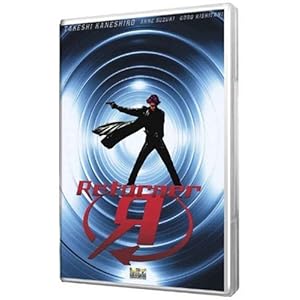
Review: RETURNER (2002)


Coolest DVD Cover in the author's opinion

It is hard for me to review this film without being a little subjective for nostalgia's sake. I caught it on television for the first time since I lived in Memphis (which was 6 years ago). The reason why it is hard for me to review a film such as this is because when it came to be watching Japanese films, some of the first ones I saw I didn’t see again till recently. RETURNER is one of those films. Such juxtaposition between my views on these films then and now proves interesting.

I saw RETURNER when I first started to notice that some channels on television actually did show some Japanese films that were not kaiju related. This included ONMYOJI, ONMYOJI 2, VERSUS, KUNOICHI: LADY NINJA (which was especially interesting seeing how (even though I didn’t know it at the time) it was the first film I got to see with the character Yagyu Jubei in it, and was also very pornographic), JU-ON, and the last of the Shintaro Katsu Zatoichi films.

Of course, in the move, things changed. A lot of those films stopped coming on. It was not that bad, since the Sundance Channel and IFC - at the time - indulged me with their offering (which helped introduce me to a lot more). But it wasn’t till this past year that I finally got to watch - for the first time in ages - films like ONMYOJI and RETURNER.

RETURNER was a weird film for me. Luckily, I saw it before I saw any of the Matrix films. Additionally, I saw it around the same time I got exposed to the Terminator franchise. Already, I am just naturally dispositional to like the film more than the more experienced, older audiences. Along with that, I saw it at the same time I saw Ryuhei Kitamura’s VERSUS. That duo is a very interesting thing to get exposed to at the same time - young me would kind of want to start thinking all Japanese action films had their main protagonist be leather trench coat-clad with their enemies being gangsters from one side of the Sea of Japan or the other, involved with something from the science fiction or horror genre.

For those who do not know, RETURNER concerns a young girl going back in time to stop a group of Chinese gangsters (with a Japanese member) from screwing around with a space craft holding an extra terrestrial monikered “daggra”.

With all that I have told you now, you will now see why there is influence from the TERMINATOR. Even a bit from INDEPENDENCE DAY if you dare to read too much into it. THE MATRIX comparisons come from the visual style instead of the substance. In fact, the slow motion in Returner is not like the Matrix's at all. Where as the Matrix did bullet time to just make a pretty picture, the slow motion in Returner is a side effect of the use of a time-slowing decide our protagonists have at their disposal. It actually serves the story.

In a more innocent time (when I first saw this film), I just thought this was a fun action film with some cool direction. But, since it is six years latter, I know a lot more about film. I know a lot more about how filmmakers can express ideals almost subconsciously into their work. And I also know this film was made by the last guy to legitimately show Godzilla on the big screen in Japan (Even if for a few seconds) - Takashi Yamazaki. I guess I cannot say I expected the greatest movie ever, even with Yamazaki’s name on it (seeing how much acclaim he has gathered since his ALWAYS films). It did feel a bit more welcome seeing that it is from him though. But then, we get to something quite interesting about the film…

The anti-Chinese sentiments. It is Chinese gangsters that are the main antagonists. Their Japanese member ends up turning his back on his Chinese friends. We also find out that in the future, the last resistance against the Daggra aliens is in Tibet (Daggra is a Tibetan term). In other words, Tibet is the last standing ground for a Triad fuck up.

But some will think that conclusion is very close to one “grasping at straws”, so we’ll just keep that to a simple curiosity. Other than that, this is a science fiction story which isn’t purposely trying to put a mirror to humanity or anything like that. Instead of a theme being expressed, we just have a group of characters acting out on the premise which involves their histories (check this out - Milly’s (the main female character) history is the future). Milly’s partner in the present day (now our past of 2002) is Miyamoto, someone who grew up in China and was an indirect victim of the child slave industry lead by his arch nemesis - Mizoguchi - who is the Japanese member of the Triads who is going to lead the fuck up. Milly and Miyamoto’s scene together have a certain warmth to them which really keep the film character driven, and that is where the film excells.

Yes, it has some great SFX (mostly CG), but the not-too-complex story and the warmth coming from their scenes together really do help the film from being derivative. But that’s RETURNER, a simple film with a couple of good things going for it. It’s purely an entertainment and a well made one at that.

11.25.2012

HEAVEN AND EARTH Theatrical/Uncut Edit List


This is not the first time that this blog has had material related to the film HEAVEN AND EARTH (1990) on it. For a more traditional review of the film, please follow the link here:

http://journalismg2km.blogspot.com/2010/05/heaven-and-earth-1990-ten-to-chi-to.html

This article is of differences in edits. Indeed, HEAVEN AND EARTH has an extended "uncut" version released in Japan on home video, seemingly only been released in Japan. The uncut version of the film is 21 minutes longer than the theatrical cut, but both versions of the film contain shots and extensions of scenes unique to themselves, hence more variance. It is such that it can be compared to the different cuts of Ridley Scott’s LEGEND. 

This is a list of the differences in the two cuts of the films. 

-

Unique to the Theatrical Cut
Though possibly only in the version on American home video, there is a small prologue which sets up the time and location of the film - like this being 16th century Japan and that the two war lords is Kagetora and Takeda. 

Use of Different Angles
During the village raid coinciding with the beginning narration, different angles are used for the cavalcade of horse-laden samurai coming down a hill. 

Unique to the Director's Cut
When Kageora has a letter of praise read to him in front of his peers, the directors cut extends the scene considerably. We see the ceramony revolving the opening of the letter being a lot more formal and complicated. Added shots make the scene more formal. Unlike the theatrical cut, we have a documentarian shot panning down the middle column of fellow samurai, titling names and positions of those in attendance. Most important is also the expression that instead of paying all of his attention to the opening of the letter, Kagetora is looking at a stone idol of the god he has dedicated himself to - Bishamonten.

Unique to the Theatrical Cut
The letter scene ends in the theatrical cut with Kagetora saying thanks for the letter. Where as the directors cut skips ahead to a deer hunting scene, the theatrical cut keeps to a scene of Usami - one of Kagetora's most trusted men - talking to Kagetora during twilight next to his castle in Echigo. Kagetora ponders on his right to be a ruler when it meant the slaying of his brother. Usami reassures him. 

Unique to Theatrical Cut
The deer hunting scene which leads to Kagetora meeting Nami for the first time is extended a bit with shots of Kagetora drinking from a stream, expressively getting off his horse, and the deer he was hunting looking back at him. 

Unique to Director's Cut
While Kagetora watches Nami and other priestesses play the flute and bells, a shot of an elegant waterfall is inserted, causing not only an extension of the scene but also an extension of the music being played. 

After this scene, the differences between the two cuts get more drastic. The theatrical cut goes onto play a scene (which would come up latter in the director's cut) of Takeda, his lover Lady Yae, and other soldiers looking at a mountain range which marks the final barrier before extending Takeda's dominance to Echigo and questioning Kagetora's war title, "the Tiger of Echigo". The directors cut goes into a scene which would be played latter in the theatrical cut of Takeda being shown a bunch of rifles which, due to Kagetora's dislike for them, will give him an advantage in future battles. Again, there is stipulation over the "Tiger of Echigo" moniker.

Both the theatrical and directors cuts synchronize back together with the next meeting of Usami with Kagetora in a house. In the scene, halfway through we see Nami and we have the first dialogue the two characters say to each other in the film. Dialogue is the same and takes up the same amount of time, yet the shot choices are different. The theatrical cut adds in shots of Kaegora looking at Nami pouring a beverage where the directors cut keeps the camera and shots more stagnant (the Kurosawa influence bleeding in) on Nami. The directors cut goes onto show the scene of Takeda, Lady Yae, and some men looking over the mountains and talking of Echigo. 

Unique to the theatrical cut
The scene is extended with Kagetora and Nami looking out at the rain, with Kagetora asking Nami if everyone’s destiny is pre-determined. It’s after this that the theatrical cut shows the scene of Takeda looking at the guns his soldiers are going to use. 

Afterward, both cuts resynchronize to a scene of Kagetora - now with mustache - checking out rifles that his men will use.

Unique to the Directors Cut
The dialogue about rumors of a traitor to Kagetora is extended on a bit in one take, keeping all in the frame scenic a la Kurosawa. After added dialogue, shot progression goes back to being the same as the theatrical shot. 

Different Shot Progressions over same audio
The scene where Nami plays her flute for Kagetora and gives him a book on battle strategies is different only in what can be more scenic - a more intimate view of the romantic sub-plot or a more distant view. The theatrical favors the more intimate view where as the director’s cut chooses the distant path. 

Unique to the Director’s Cut
Durring this scene, Nami questions as to why Kagetora hasn’t married yet. Kagetora watching Nami walk away in the cherry blossom filled breeze is the same, but afterward, the directors cut has an added short scene of Kagetora riding his horse during a full moon in a cherry blossom field - thinking of Nami (this scene can be viewed in Tetsuya Komuro’s music video for Heaven and Earth). 

Unique to the Theatrical Version
Instead of a wide establishing shot as shown in the directors cut, the theatrical cut has a shot of samurai blowing horns, signaling battle. Additionally in the theatrical cut, the battle is extended a bit before the traitor that Kagetora is weeding out decides to use balls of fire as a weapon. Theatrical cut has more shots of the fireball offensive. There is also more close ups of Kagetora when his envoy is speaking to the traitor of the possible death of his son and wife (right before they are killed).

Different Shot Progression
Kagetora praying and meditating after having killed a wife and her child plays out the opposite way in the directors cut. Same shots, different order. 

Unique to the Directors Cut
Along with a longer shot of Takeda’s men going to Usami, making Usami a traitor, the convos the two have is extended at the beginning. 

Both cuts synchronize to a shot o Takeda talking alone with Lady Yae of establishing a possible naval force. A purple sky shot from a lot earlier on in the theatrical cut is move to after this in the director’s cut. 

Unique to the Theatrical Cut
Durring the initial set up for the first real battle between Kagetora and Takeda’s forces, we see Usami talking to Kagetora before we have the shot of Kagetora and his generals looking over the cliff to see the plain filled with Takeda’s men. Director’s cut simply has an extended version of the cliff shot. 

Unique to the directors cut
With the initial attack (which includes Kagetora establishing bridges to help men enter the plane), the battle starts sooner and individual shots last longer than their counterparts in the Theatrical cut. This includes an extended cut of Takeda asking his men who is Echigo’s best warrior. Theatrical cut has extra shot of Kagetora watching the Battle. The celebratory dance by Kakizaki (the best warrior of the battle) is longer and is of alternate shots in the directors cut.

Unique to Theatrical Cut
We have a scene where Kagetora talks to his men before having to gun down Lady Yae. Tetsuya Komuro’s melody for heaven and earth can be seen being played by a soldier playing the flute at the beginning of the shot. 

Unique to the Director’s Cut
When the frame rates for the shots start speeding up to give the scene momentum via slow motion, the director’s cut inserts an image of an enraged Takeda, having learned his mistress is acting on her own accord. Not a necessarily good choice. Shot progression of actual shooting differs from Theatrical cut. 

The next three scenes are of Takeda’s retreat after Yae’s shooting, talk of Usami being a traitor to Kagetora, and Nami talking to her father Usami of his betrayal. It is that order in the theatrical cut, while in the directors cut, it is first talk of Usami being a traitor, then Takeda’s forces retreating and then Nami talking to her father.

Unique to the Director’s Cut
Nami feints after talking to her father about his treachery to Kagetora

Unique to Theatrical Cut
There is an extra shot of Kagetora looking at the sun rise before he writes a letter to Usami, telling him of the learned treachery and of the duel to be had as judgment. 

The battle between Usami and Kagetora is the same dynamic as the scene where Nami gives Kagetora battle strategy books. 

Unique to Director’s Cut:
More shots of grass waving in the wind and of Kagetora demanding entrance to see Nami once she learns that he killed her father. 

In the smoke signal scene, the directors cut has a simple wide shot of the Takeda base raising a smoke signal with horses riding towards the camera. The theatrical cut plays it more complex, with the camera zoomed in on the pale of smoke, only to go onto a wide shot of a mountain range showing the use of smoke signal. 

Unique to the Directors Cut
Takeda’s forces dispatch to the Kawanakajima plain, yet have to maneuver through some foggy mountains. In the Directors Cut, we see Kagetora’s men move in front of them. The foggy Saigo Mountain scene has additional scene in the directors cut of Takeda’s point of view of things, moving Kaegtora footage back a bit. This also includes interesting CG soldiers walking across a map of the area, showing where Takeda was taking his men. Takeda’s discussion of strategy after this is extended in some places in the director’s cut, followed by more CG map footage. 

Unique to Director’s Cut
News of Nami’s death to Kageotra is drawn out a bit longer in the theatrical cut. 

Now, for the rest of the film, there is only the main battle for the Kawanakajima plain. 

Unique to Theatrical Cut
Shots of spears held to the sky climbing up the hill with chanting is extended, along with added shots of a pleased Kagetora added in. 

Unique in Directors Cut
Individual shots of the battle are longer in the directors cut. Alternate close ups are also utilized along with new shots showing Takeda’s use of rifles. By the time Kagetora and Takeda meet, the two cuts have two different battles (both on horseback, fighting on the stream still). 

7.09.2012

Looking back over DEATH KAPPA

This is a review for DEATH KAPPA, a film which can be only described as "horsepucky". It is, to an extent, a fun film, but also a boring film. You are either in the mood for this film or not. While watching it this past time, I was a "middle" mood, thus I am on the fence with this film. This film seems to have a message - since a JSDF member says that Kappa taught Japan something it forgot... well... the audience might have learned what he is talking about (not like all of Japan was following the main female protagonist's story like we are).

Oh yeah, here is the plot of the film.

Kanako is an unlucky young lady. Many a time in kaiju eiga have Japanese "idols" cast in a film, but this time around, our main character is... or atleast was an idol. The idol curse is the typicall Hollywood trajedy - people love you for so long and then they go on to the next thing. Idols are subject to the buisness side of the entertainment industry - they are products. Sooner or later, the audience will tire of you and go for the next thing. Either that or they will not buy your products at all, making you a bomb. Kanako didn't go anywhere. The materialistic life didn't work out, so screw it, it is time for her to get back to the old country to take care of her grandmother.

However, when she gets back to the country side, she has a couple of reminders of her life in the big city. Her town is just now getting her merch (which doesn't seem to be selling), and right as she meets her grandmother again, a couple of arrogant teens run over her grandmotheer and leave her for dead - along with bumping into the ocean (with their car) a Kappa shrine. For those who do not already know, the Kappa is a Japanese sprite of shinto belief in which is classified as a goblin with turtle like qualities.

To fulfil her grandmother's dying wish, Kanako has to take care of the Kappa. It is more of an act of devotion rather actually taking care of a sprite... the wish is like saying to someone to take care of the demon in the basement... until it turns out the shrine dumped into the ocean comes alive and eats the cucumbers which were left out for it.

This first act is a nice little metaphor for escaping the modern materialistic culture and escaping back into the more spiritual, olden cuture... of Japan.

Meantime, it turns out that there is a threat within this little town. Problem is, the threat on the surface seems to be good meaning, bringing back the pre-WWII Spirit of Japan. Kanako and the people who ran over her grandmother are kidnapped by decendents of Japaese WWII soldiers who want to bring an elden Japan back... with mutated fish-like creatures which were originaly going to be used in the war. Kanako is saved from these bad guys in a scene which is an amalgram of weird, Saving Private Ryan, and Texas Chainsaw Massacare. It ends with an interesting mix of prctical and CG effects of an atomic explosion. It's the perversion of the drama angle in 1963's ATRAGON.

Such an explosion releases a seemingly unrelated monster (or maybe related, it is not specified, but the main antagonist monster looks similar to the fish soldiers) named Hangyolas who ravages the big city, the JSDF, kills Shinji Higuchi (or rather a character played by him), and battles in iradiated Kappa - DEATH KAPPA - in a battle which mixes sumo, what we can see in a Bruce Lee film when he gets the nunchaku out, and a little kaiju volleyball from a 1966 Goji film.Afterwards, Kappa rips Japan a few new assholes until Kanako wets his plate (he is a kaiju that needs to stay moist).

I guess the message is this: Japan was better off idealistically back some time ago, and the modern materialism or the radical Showa-era spirit are pretty bad things. I guess.

Maybe this whole meta-kaiju movement where kaiju films have to be parodies on the genre is the way of feeling good about something like GODZILLA-FINAL WARS, which wasn't a parody but might as well can be. When it comes to directorial decisions, how do you deal with DEATH KAPPA's style? You try to make a live action anime evidently. That is what the direction seems to be like. An example of anime-esque direction which can be seen here as is the direction is not always logical, rather, acts to add dramatic substance. Sudden costume changes and the flying with the lance shots are evidence of this.

One has to wonder if this is something which was done to attract the audience. It would make sense.   DEATH KAPPA is so over the top like it's brother productions like THE MACHINE GIRL and TOKYO GORE POLICE. Maybe even more. Which brings to the next point to clear up (or maybe just wonder about), the American influence of this film. Of the three companies that worked on this film, the one which got top billing is Fever Dream Productions. Another company credited with producing the film is Tokyo Shock. Connecting these dots, it seems as if Americans cannot do kaiju right.

But you got to give it to Tomoo Haraguchi for going the extra mile in bringing us this film, seeing how he directed both the human drama and the kaiju action. He has experience directing both types of scenes, having been involved with the SFX of the Gamera and Godzilla series as well as a director of his own films (KIBAKICHI, which is a yokai film). If execution of certain styles shows the utility of a good director, then I guess Haraguchi did a good job. Just that the script which he was given... sucked. With the TWILIGHT ZONE and THE TEXAS CHAINSAW MASSACRE showing their heads of influence, one has to wonder.

DEATH KAPPA needs a bit, and only a bit, of praise for something though in regards to the SFX side of the production - the creation of Hangyolas. While the suit is meant to look fake, but the kaiju himself looks as if he could kick some major tail. Thankfully, for some individual shots, Haraguchi doesn't go for the documentary approach. It seems almost as if a crane was used for some sweeping shots (even though it could just be the camera moving on track). It is the bit of new wave which is welcomed wholeheartedly.

DEATH KAPPA isn't in need of much more discussion. It was a project to replicate the kaiju eiga of old while making fun of it. The score has to sound epic and Ifukube-like, the SFX has to show strings with all effort to cover them up thrown out of the window, and it doesn't need to be deep. This film, like most kaiju eiga, are products of a money making machine called the film industry, only DEATH KAPPA is more of this than the other products.

Death Kappa is a film which can be enjoyable to watch, but if you are not in a "Death Kappa" mood, forget about it. The bad just raises questions about how the poking fun/meta-physic aesthetic works with kaiju eiga and questions regarding the involvement of American companies involved with the production of kaiju eiga. At least the film can be fun though, with it's message of going back to your roots to save the world and in doing so becoming more spiritualistic (if I saw a Kappa, I'd convert to shinto) and crazy mix of anime direction of the human drama and good ole fashioned kaiju scenes (for the most part).

6/10

4.08.2012

Guy Tucker: The Secret GODZILLA 2 Winner


Skip to 6:29 for the meat of this story


Those who were around for G-CON ‘96 and attended already knew this bit of information. Those newer to the fandom (the author’s generation) probably do not know this. As mentioned in the article about GUNHED (the last article published before this), there were techicaly three winners of Toho’s GODZILLA 2 contest. Jim Bannon, who ended up having his story turn into GUNHED, Shinichiro Kobayashi who wrote GODZILLA VS. BIOLLANTE, and unofficially Guy Tucker.

I contacted a close friend of Guy Tucker’s, August Ragone, and this is what he had to say:

"What Guy said was true — I read a copy of the script right before Guy sent in it to Toho. I wonder if I still have a copy of this script somewhere...


The psychic girl in his screenplay had a direct connection to the antagonist monster — not Godzilla — and her motivation was similar to the girl in GAMERA 3. Revenge. Kind of like Katsura in TMOG, actually. The monster's name was Ankyron. The opening of his screenplay had Godzilla going white-hot from radiation overload — kind of like a meltdown — and attacking Hong Kong."

This is most interesting. Chances of ever reading this script is against us, but it does leave some to the imagination. Imagine if things turned out differently, such as Tucker’s script being the one chosen and that elements from Kobayashi’s script were stolen. Fate is interesting.

4.02.2012

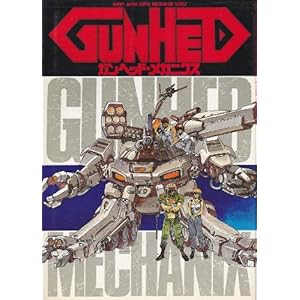
The Deal with GUNHED


GUNHED is pretty bad. Thus, this review of the film will be written in such a manner.


One can think of it as this: director Masato Harada is going through the news and Koichi Kawakita is talking about what is probably his greatest work: Gunhed. Harada would think, "Shut up Kawakita". Except for the production designer Fumio Ogawa, composers Toshiyuki Honda and Takayuki Baba, and special effects director Kawakita, Gunhed is probably a stain on the resumes of those who worked on it. It is an oddity of the type one rarely sees. A blunder which will make people critical of films like GODZILLA VS. MEGAGUIRUS think twice about what is an actually bad Toho film.


It seems GUNHED was to be released internationally in theatres.* We have some characters speaking fluent English, including Brenda Bakke from STAR TREK: THE NEXT GENERATION and a black guy who falls under the stereotype that the black guy gets killed first. Turns out, GUNHED was based on one of the stories turned into Toho’s GODZILLA 2 contest. It seems there were three winners. You have Shinichiro Kobayashi, whose script lead to GODZILLA VS. BIOLLANTE. Then there is Guy Tucker who was unaccredited for the creation of Miki Saegusa and would go on to have elements used in future Godzilla films (a la the intro to GODZILLA VS. DESTROYAH). Finally, there is Jim Bannon. His script was turned into GUNHED. This is what his original script was basically:


http://tohokingdom.com/cutting_room/godzilla2.htm

What we got was Gunhed, directed by Alan Smithee (I thought that the use of that pseudonym was an American tradition). Alan Smithee is actually Masato Harada… which if you keep with credits, Harada is a Japanese Academy Award nominated director who we Americans most likely know as… the main antagonist from THE LAST SAMURAI with Tom Cruise (?). Guess there has been odder stuff out there.


The story of GUNHED goes something like this: In the year 2005, a whole island was used for the building of a super computer. Being used to make robots, the system KYRON 5 (Vista model) decides that humans are unnecessary a la TERMINATOR. Instead of risking war on a global scale, they fight the computer on its own island. What better to fight off robots than with more robots. Humanity brings in GUNHEDS, which are not too unlike Gundams or as some internet bloggers have likened too, Transforming tanks. Kyron 5 fights them off with biobots, which are robots made from humans put in a green liquid, and the Aerobot, which is a gargantuan leviathan of a robot. These little Gunheds are like David against the Aerobot Goliath. Two big outreaching claws and three "eyes" which shoot out explosive lasers. Even more ballsy, the Aerobot doesn’t even care about breaking through the compound’s walls and pipes (this island’s structure is like the Dante’s inferno of robot cities) just to get to it’s target. It is a truly bad ass robot. Long story short, the Gunheds were effective enough to make ongoing fighting of Kyron 5 unnecessary. These people nipped that Judgment Day in the bud.


Back in the outside world though, computer parts become scarce enough that they are more valuable than gold. Enter our heroes. Flying aboard the Marry Ann (might make you think of COWBOY BEBOP in passing. If anything, it will make you think of Lone Star‘s ride from SPACEBALLS), you have a bunch of bandits who scavenge to sell on the black market. You have the black guy, an Asian chick who can speak English, two Japanese guys who are going to get killed just as easily as the two aforementioned members, Bebe, and our main protagonist, Brooklyn. As in Brooklyn Dodgers. He wears a Dodgers uniform under his clothes (yet his character claims he doesn’t know what it means).


The bandits fly down to the island to grave rob the Gunheds (which, at least the one Brooklyn revives latter on in the film, have a real personality to them, so it is pretty bad). Already, they are off to a bad start. Not only will exploring for severed Gunhed parts going to be difficult, but they see that there is a (Walker) Texas Ranger Helicopter smoldering in the background. Something’s up.


As the Bandits go through the 200+ levels of the compound, they find some interesting things. Such as an advanced Pepsi dispenser. They also find a surviving member of the Texas Rangers helicopter, Nin (the Star Trek chick). Together, they go looking around. The bandits find what they want, but along the way they end up wanting what Nin was sent to the island to get, a vile of Texmexium (yes, ridiculous I know). Turns out, Texmexium has taken over Nuclear capabilities as the ultimate power source (imagine if Godzilla had some of what those super computers were smoking).


It seems as if the Kyron 5 system is still alive enough though. Out of the blue, a biobot knocks Bebe into a vat of green stuff which in turn turns her into a biobot (SUPERMAN 3 anyone?) who is out for one thing: the vile of Texmexium our heroes have. With the Texmexium, Kyron 5 will be back to being fully operational and after a hopeful clean up of the island, will start to rage war on humanity. I could stop now, but there is one other thing which needs to be mentioned in this summary - on the way, Nin and Brooklyn run into two kids - Seven and Eleven. 711. A gas station reference. God.


Manga by Kia Asamia


C’mon man… there is more cheese, but you’ll have to buy the film to experience it.

The direction on the human side of things is nothing spectacular. The writing is full of cheese. The editing (as many internet bloggers have attested to) is of the caliber that should have been bestowed onto Tommy Wiseau’s THE ROOM. Yet the SFX, the production design, and the score help. The film has a definite feel to it. Atmosphere of the type is something not easy to achieve (the opening sequence is really good at this). There is a feeling that you are watching a live action anime (not to make someone think of the craptacular G-SAVIOR). That helps. In fact, it might answer for some of the film’s oddities (such as Seven’s random mannerisms).


The important question is how could things like this get so messed up? Like said, the script was cannibalized into something else. What elements were added to the film? Midnight Eye interviewed director Harada and an interesting bit of information came up: "At one point, I wanted to do a sort of remake of SAHARA with Humphrey Bogart, and that kind of story was incorporated into the Gunhed story." Those who want to make comparisons can read what this page has http://en.wikipedia.org/wiki/Sahara_(1943_film)


On top of that, Harada seemed to have already known that Japanese post-production services sucked (At the time). In fact, Harada did some interesting stuff with this information, using it to involve an American company. "So I need the Lucasfilm people to work on the Gunhed sound effects. They agreed with that, so we went to the Skywalker Ranch, near San Francisco, and I had really nice discussions with the staff there. I had already designed all the different sound effects, like one hundred different tones, 10 different sounds for Gunhed alone." Then Toho comes into the picture. "…Toho, when we talked about the budgeting, just cut the post-production part. So although that was a basic condition between me and the producers, they just totally ignored it. And then I had to compromise with the sound people in Japan. So certain things I was promised didn't show up…"


But of course, the editing is something which we have to come back to. It’s been an American tradition that the director sits with the editor to edit the film together. Isn’t that the way it is in Japan? If not, it damn well should be, because director Harada seems to have a good head on his shoulders, he was just fucked with a good bit. Editing for GUNHED was done by Yoshitami Kuroiwa (probably doesn’t help to note that the first name has the word "shit" in it). GUNHED is plagued with bad editing. That is something which is not debatable. What is debatable though is weather this was the work of a bad editor or if it was an age thing. For my money, it is the latter. Looking up resumes, Kuroiwa - as it turns out - was a major editor. THE RETURN OF GODZILLA and BYE BYE JUPITER are little in comparison to titles like SWOD OF DOOM and KILL (both of which got Criterion releases). GUNHED was made the 55th year of Yoshitami’s being in the industry. He made his bones early on in the late 50’s and all through the 60’s. Either age was getting to him or Toho’s system changed or he didn’t have director Harada sit down with him. Point being, this is not the work of a bad editor.


On the thespian side of things, only one thing can be said: If acting was a priority in this film, then it would only be a priority to two people - Masahiro Takashima and Brenda Bakke/ Masahiro Takashima does a straight foreword job with his role. It is totally believable and isn't as bad as his Japanese or Asian co-starts. Brenda Bakke is an interesting actress though. She plays it all cool, calm, and collective. The fact she does it as much as she does makes it seem as if she is over-doing it. It works in some cases, but not all cases.


Now we can start talking about the good things with this film. Upfront is the soundtrack. Though called repetitive and such, it has a distinct Japanese feel to it. Synth heavy, the work by Toshiyuki Honda and Takayuki Baba gets certain moods out which help compliment the film quite well. Such as the main theme (the video above). It mixes the obligatory techno-feel that the soundtrack should have (due to what the film is about), but other beats in the piece help give the film the general feeling of a technological jungle (which Island 8J0 is).

The production design is the best aspect of the film. For $10 million, Fumio Ogawa really pulls it off. Except for some shots durring the main battle, the matting is great. Especially when paintings are used (hence why they are great in comparison to the aforementioned battle shots - paintings don’t move). Another simplistic effect are the wire frames. Considering this came out the same year as GODZILLA VS. BIOLANTE (which used wire frames for some of the pre-battle sequences), GUNHED blows the kaiju film away. Of course, they would be CG enhanced with Kawakita’s Japanese Academy Award winning GODZILLA VS. KING GHIDORAH, but this is really a great exhibition of such a technique. There is even use of CG in the film which, considering the Godzilla series’ progression under Kawakita, was a surprise. A floating mine attracted to human voices featured in the film are rendered in CG are good looking. Why the wait till GODZILLA VS. DESTORYAH for some proper use of CG (this is not including things which can be interpreted as computer simulations a la some shots of SPACEGODZILLA and MECHAGODZILLA) via helicopters? Heck, if the CG used here was of the same quality as the alternate version of Mothra’s wing unfolding, I’ say Kawakita should have kept the shot. Not to mention that the Godzilla films had bigger budgets than this film.

Of course, Kawakita isn’t known for his matting shots and his wire frames. He is known for his in camera work. There is no suits, but rather models. But what models. The large canvas the matte paintings serve to illustrate the island with is replicated with models quite nicely. Of course, it is a no-brainer that the most famous aspect of the film - the 1:1 scale models of the Gunhed and Aerobot (made of fiberglass) - help a lot. Of course, these seem to be used only in close up shots (this is not a Ridley Scott film) and there are models (much smaller I’d assume) which do most of the job. But, when it comes to "most of the job" the models here succeed. Maybe because these mechanical monsters are much closer to the size of a human than Godzilla is or that these mechanical structures are more reality-based, but the effects like the Gunhed’s triple-barreled Gatling gun’s effect is one which the viewer would thin "I bed it’ll resemble the effect tanks have on Godzilla, tanks shooting flares". While it is the case, it is much improved thanks to the scale. Of course, of note is the intro to the film, which combines all of the above along with a nice clouds ‘n thunder shot. This really was Kawakita’s masterpiece. If one was to see this via the R2 DVD, one could argue that this should have been the film Kawakita was to have gotten a Japanese Academy Award for. It should also be noted that this film is a favorite of James Cameron. Any Terminator comparisons are warranted, but take note that the AMP suits in Avatar look a good bit like Gunheds.


In the end, GUNHED is just Toho’s equivalent of a Michael Bay film. Great visuals, crappy execution of the story. At least GUNHED has a cool story which deserves to be revisited (especially in this post-Matrix world). As for why the story is executed so poorly, it is all in the post production. It seems Toho just did not give a damn. Maybe because of changes within the entertainment industry at the time, things were being changed around and GUNHED was a victim of it. Maybe Toho is just poor that way. To note, turns out Kadokawa (who would buy out Daiei a decade plus some later) co-produced the film. Could this be a reason why a GODZILLA VS. GAMERA would not happen (speaking on a business level)? With Toho’s crooked way of doing things, I wouldn’t doubt it. I’m just happy that the score, along with some aspects of the film at least make the film undeniably Japanese (making it seem as if we follow one specific Gunhed the whole film through, and that Gunhed seems to have a kami, along with a very Japanese-felt soundtrack).


*Why I say that GUNHED was aimed for international distribution and that such things as the inclusion of an American actress is not something that was a limitation of the script - Toho could have changed that.


Links:
http://www.toho-a-park.com/event/index.html
http://www.youtube.com/user/Gunhed2039 http://www.midnighteye.com/interviews/masato_harada.shtml